
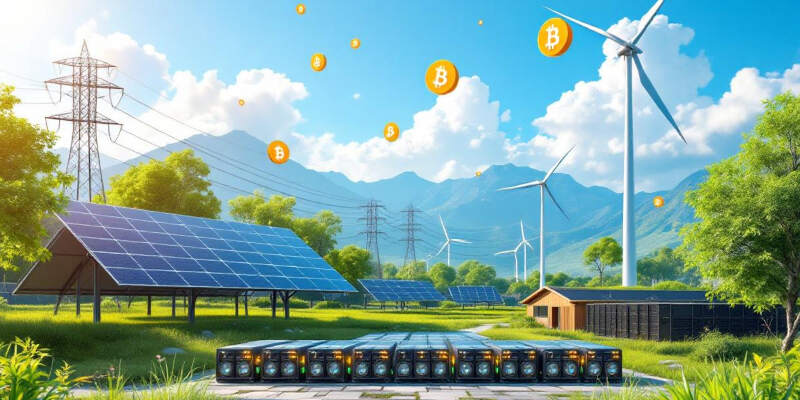
The "Boiling Oceans" Myth
If you read mainstream news, you might think that Bitcoin mining is an environmental disaster. They claim it consumes as much energy as small countries and destroys the planet. But this narrative ignores a fundamental truth about how energy grids actually work.
In reality, Bitcoin miners are not the villains; they are the scavengers of the energy world. They eat the energy that no one else wants, preventing it from going to waste.
The Problem with Solar and Wind
Renewable energy has a fatal flaw: It is unpredictable. The sun shines at noon when people are at work (low demand), and the wind blows at night when people are asleep.
Grid operators face a massive problem called "Curtailment." When there is too much solar power on the grid and nobody to use it, they literally have to disconnect the solar panels and throw that clean energy away to prevent the grid from overloading.
Enter the Bitcoin Miner
Miners are the perfect "Buyer of Last Resort." They can be turned on or off in seconds.
- Too much sun? Turn on the miners. They soak up the excess energy and monetize it.
- Peak demand (everyone cooking dinner)? Turn off the miners instantly to free up power for homes.
This makes renewable energy projects more profitable and encourages companies to build more solar and wind farms.
Home Mining with Solar
This isn't just for big industrial farms. We see more and more users on Gokby Pool who are "Solar Miners."
If you have solar panels on your roof, you know the struggle: Selling power back to the grid often pays very little (feed-in tariffs are dropping). Instead of selling your excess power for pennies, you can feed it into a Bitaxe or S19 miner.
The Math:
- Selling to Grid: $0.06 per kWh.
- Mining Bitcoin: Equivalent to ~$0.15 per kWh (depending on hardware efficiency).
By mining, you are essentially "storing" your sunlight in the form of Bitcoin.
E-Waste and Longevity
Another criticism is electronic waste. Critics say ASICs are thrown away every year. This is outdated information.
Modern machines like the Antminer S19 XP are built to last 5+ years. Furthermore, older machines don't go to the landfill; they move to areas with cheaper electricity (like hydro dams in Africa or South America) or are repurposed as heaters (as discussed in our Heating Guide).
Conclusion
Bitcoin mining is the missing puzzle piece for a 100% renewable energy future. It provides the financial incentive to build green infrastructure in remote places.
Are you mining with green energy? Join the eco-friendly pool:
stratum+tcp://btc.gokby.com:3333

